25 Years of Optima: It All Started in a Spare Room
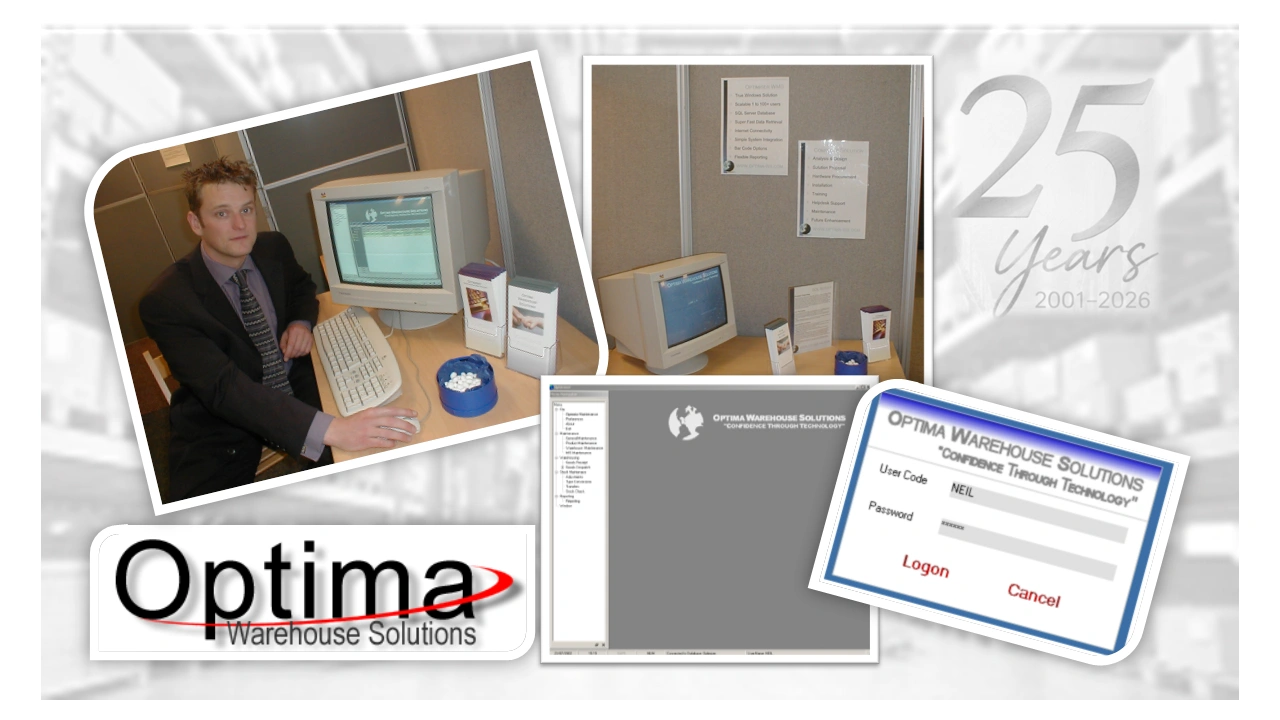

In May 2001, the world sounded different. It was the era of the screeching dial-up tone and the release of Outlook 2001. While the rest of the world was just discovering Wikipedia, Chris Roberts and Neil Bennett were making a choice that would define the next quarter-century of their lives: they decided to stop building someone else’s dream and start their own.
With no corporate office or technology hub, they set up shop in their respective spare rooms - built on plenty of determination, industry knowledge, and a belief that warehouse operations could be managed in a smarter, more efficient way. The foundations established in those early years still shape the way Optima works today
Coffee, Determination, and a Very Slow Connection
The first 18 months weren't exactly glamorous. While Chris was effectively "locked away in a darkened room"—fuelled by coffee and working seven days a week to write the code for what would become Optima WMS—Neil was out on the road demonstrating the software and doing whatever it took to keep the business moving forward.
At the time, introducing a Warehouse Management System (WMS) wasn’t simply about selling software — it meant changing mindsets. Businesses needed to trust not only the technology itself, but also the people behind it.
Demonstrations in these early years weren’t far from straightforward. PCs, monitors, and servers had to be transported directly to customers' sites, networks manually configured, and fingers crossed that all the cables had made the journey. Internet connectivity was unreliable, remote access was limited, and development often continued alongside live demonstrations and customer implementations.
Every customer conversation shaped the software. Feedback gathered during site visits and demonstrations directly influenced how the system evolved, creating a WMS built around real warehouse operations rather than theory.
There was no such thing as a hosted platform back then, so the duo had to become entirely self-sufficient. Long before Teams or Zoom were household names, Skype became a lifeline for staying connected with some of Optima’s earliest customers.
"If something broke, it was down to us to fix it. That shaped how we still operate today: we learned to be self-sufficient, we listened, and we responded quickly."
2003: Making it Real
By 2003, the business was beginning to gain momentum. What started as an idea was becoming something much more established.
One of the biggest milestones came with the creation of Optima’s first true corporate identity. Until then, the business had been focused almost entirely on product development and supporting customers, but it became clear that the branding also needed to reflect the ambition behind the software.
A refreshed logo was introduced, bringing a cleaner, more contemporary look alongside a splash of colour that helped the brand stand out within the warehouse and logistics industry. It may have seemed like a small change, but internally it represented something much bigger — Optima was becoming a real, recognised business with a clear direction.
That new identity also led to the launch of the company’s very first website. By today’s standards, it was simple, but at the time, it provided an important platform to showcase the software, explain the company’s approach, and start building visibility within the wider warehousing and logistics sector.
The same year also saw Optima attend its first exhibition in Birmingham. Long before large-scale NEC events and polished exhibition stands, the setup was modest — but it marked an important moment in putting the business in front of prospective customers face-to-face for the first time.
Breaking the "Paper Barrier"
One of the biggest challenges during those early years was helping businesses transition away from entirely manual processes. Many warehouse operations were still driven by paper picking lists, handwritten stock adjustments, and manual order tracking. In some cases, there was little or no warehouse IT infrastructure in place at all.
Optima’s early customers were among the first businesses willing to embrace a different way of working. Initial projects included distribution operations based around Liverpool docks and a growing tile retailer on Ireland’s west coast looking to improve stock control and warehouse visibility across multiple locations.
These early projects proved that warehouse software could do far more than replace paperwork. They demonstrated how technology could improve visibility, streamline operations, and give businesses the confidence to grow—principles that continue to shape Optima today..
25 Years Later: Still Independent
Looking back now, it’s incredible to see how far the business has come. But despite the growth, many things remain the same. Optima is still independent, still customer-focused, and still committed to building long-term partnerships rather than short-term solutions.
Many of the values established in that spare room back in 2001 — listening to customers, staying flexible, and continuously evolving the product around real operational needs — continue to guide the business today.
Twenty-five years on, the technology may look very different, but the mindset behind it remains exactly the same.


